
Low-level red & near-infrared light, no heat treatment required
Red light therapy (also called photobiomodulation) uses specific wavelengths of red and near-infrared light delivered by LED panels. You sit or stand a short distance from the panels with the treatment area exposed, for a short session.
Unlike a tanning bed or sauna, there's no UV light and minimal heat — the panel simply bathes your skin in a warm red glow for the length of the session.
Our panels deliver seven wavelengths of red and near-infrared light — where most panels offer only two or three — for broader, more complete coverage.
Sessions are quick, relaxing, and easy to add onto a massage, salt booth, or foot bath visit.
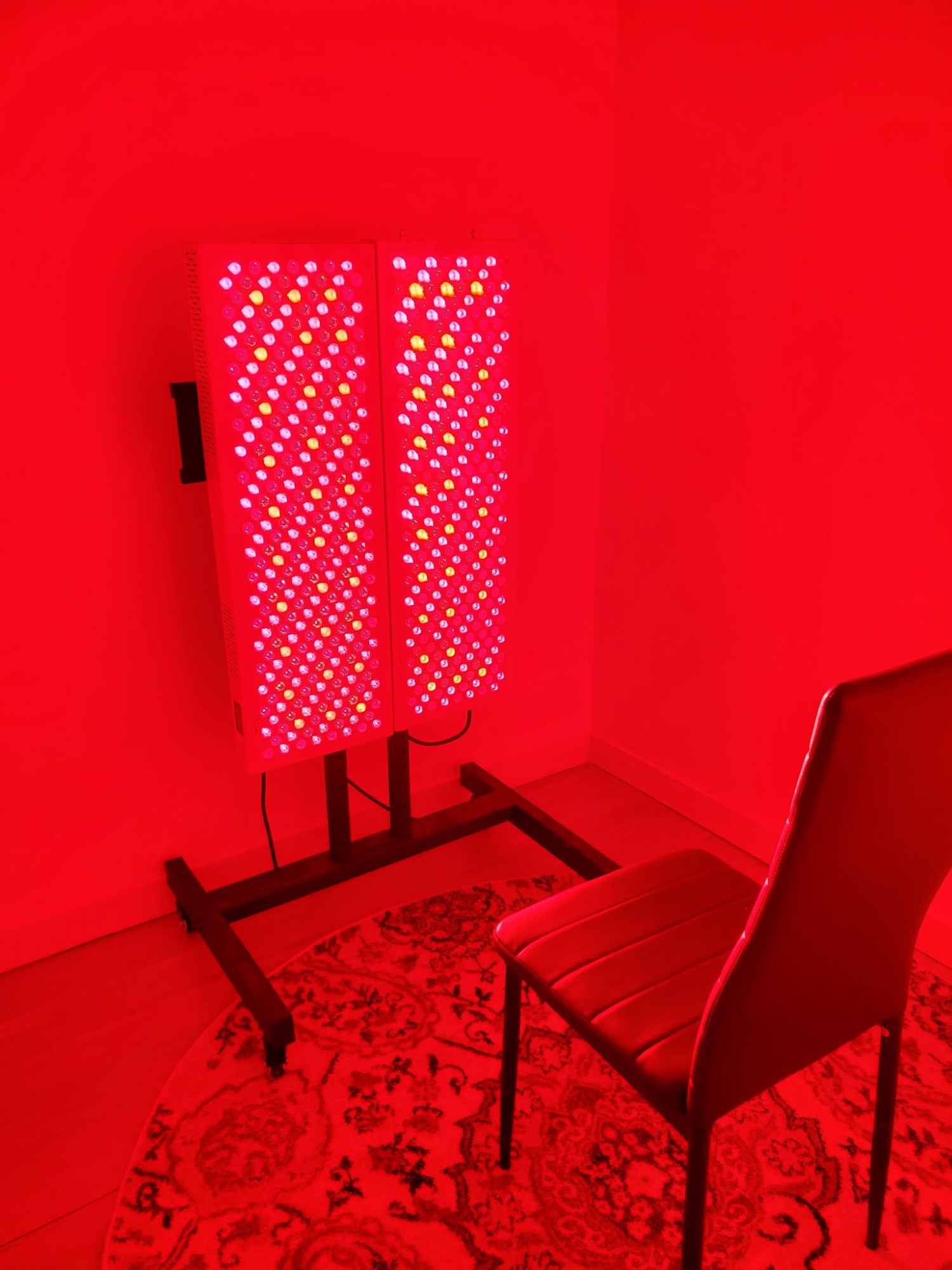
Reported benefits of red light therapy
Red light therapy is a complementary wellness service popular for recovery and skin-care goals. As with any treatment, results vary by person and consistency of use.
Skin support
Many guests use red light sessions to support a healthy skin appearance and an even, refreshed look over time.
Muscle recovery
Often paired with massage to support post-workout or post-massage muscle recovery and reduce that "worked over" soreness.
Circulation & energy
The warm, gentle light is often used to support local circulation and leaves many guests feeling recharged.
What the research says about red light therapy
Photobiomodulation is one of the more actively studied wellness modalities. A few peer-reviewed studies behind the benefits above:
-
Photobiomodulation in Human Muscle Tissue: An Advantage in Sports Performance?
Looks at red/near-infrared light and its role in muscle performance and recovery.
Journal of Biophotonics, 2016 · via PubMed -
Reverse Skin Aging Signs by Red Light Photobiomodulation
Examines red light therapy for skin appearance and visible signs of aging.
Skin Research and Technology, 2023 · via PubMed -
Green Tea and Red Light — A Powerful Duo in Skin Rejuvenation
Studies red light combined with antioxidants for skin rejuvenation.
Photomedicine and Laser Surgery, 2009 · via PubMed -
Mechanisms and Mitochondrial Redox Signaling in Photobiomodulation
Explains how red light is thought to work at the cellular level, through energy production in the mitochondria.
Photochemistry and Photobiology, 2018 · via PubMed -
Photobiomodulation: Lasers vs. Light-Emitting Diodes?
Compares LED panels (like ours) with laser devices for delivering red light therapy.
Photochemical & Photobiological Sciences, 2018 · via PubMed
These studies are shared for educational purposes. Red light therapy is a complementary wellness service and is not intended to diagnose, treat, cure, or prevent any medical condition.
Your red light session, step by step
Get positioned
Sit or stand a short distance from the LED panels; protective eyewear is provided.
Expose treatment area
Depending on your goals, you may keep clothing on or expose the specific area being treated.
Relax for ~20 min
Sessions are short — typically about 20 minutes of warm, glowing light.
Go right back to your day
No downtime, no residue — head straight back out or into your next service.
Good to know before you book
If you're pregnant, have a photosensitive skin condition, or take medication that increases light sensitivity, check with your physician and let your therapist know before your session. Eye protection is provided and should always be worn. Red light therapy is a complementary wellness service, not a medical treatment.
Common red light therapy questions
Does it feel hot?
You'll feel a gentle, comfortable warmth — not the intense heat of a sauna or tanning bed.
Do I need to wear anything special?
Wear whatever's comfortable. If you're treating a specific area (like a shoulder or knee), you may expose that area during the session.
How many sessions will I need?
It depends on your goals — some guests come for a single recovery session, others build it into a regular weekly routine. We can help you plan a schedule.
Can I pair it with massage or the salt booth?
Yes, red light therapy is a popular add-on to massage, cupping, salt booth, or foot bath visits.
Ready for your glow?
Book a standalone red light session or add it to your next visit.